How Roofers Adapt for Homes vs. Commercial Buildings
Roofers in Anderson, SC handle two very different worlds depending on whether they are working on a home or a commercial building. Many property owners assume that a roofing service is the same regardless of the structure, but that assumption leads to mismatched materials, improper drainage, and premature failure. In a region where wind-driven thunderstorms, hail, and summer humidity stress every roof surface, the wrong approach costs thousands in repairs. This article breaks down the main difference between residential roofing and commercial roofing across design, materials, installation, maintenance, cost, and code compliance. By the end, you will know what to look for when choosing a roofing contractor for your specific property type in the Anderson area.
Key Takeaways
- Residential and commercial roofs differ in shape, materials, and drainage strategy. Homes use steep-pitched systems for water runoff, while commercial buildings rely on flat or low slope designs with engineered drainage.
- Roofers working on single family homes install shingle or metal panels and finish in days. Commercial roofing crews weld membranes, layer insulation, and often work in phases over weeks.
- Materials, installation methods, maintenance schedules, costs, and code requirements all change depending on building type. A roofing contractor experienced with the wrong project type can void warranties and shorten roof life.
- Anderson homeowners and commercial property owners should verify licensing, safety practices, and relevant project history before hiring any roofing company.
Roof Form and Structural Design: Pitched Homes vs. Flat Commercial Roofs
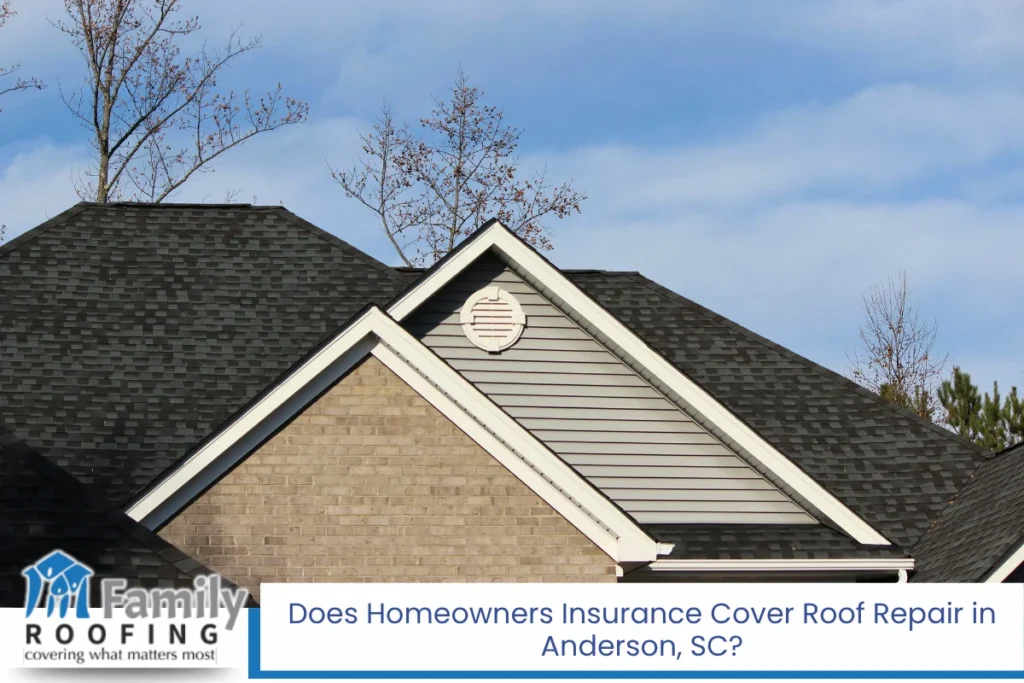
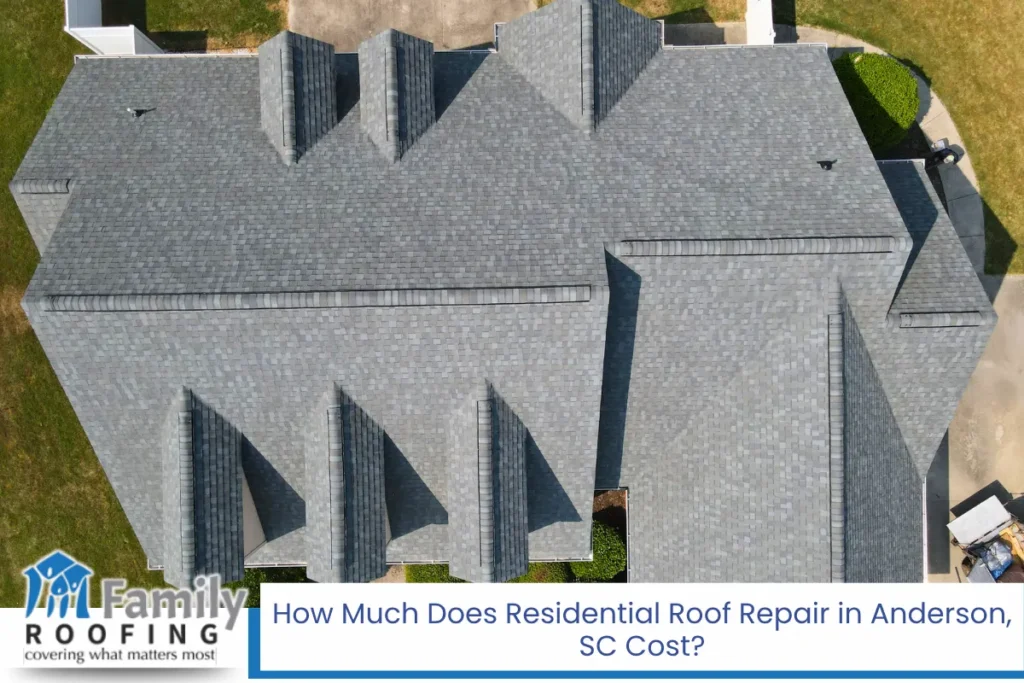
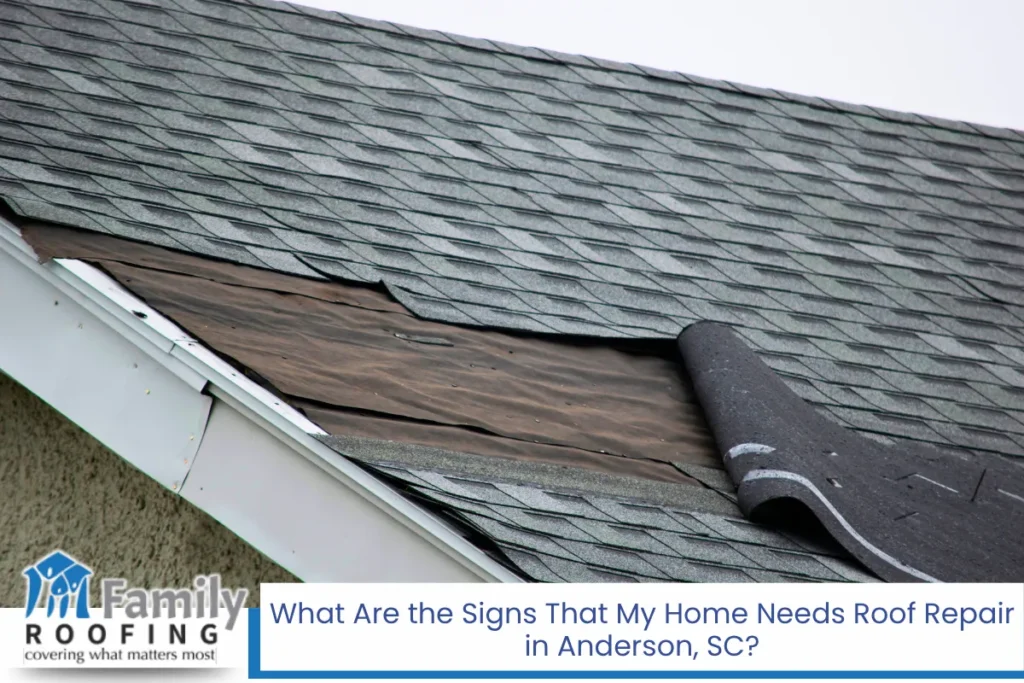
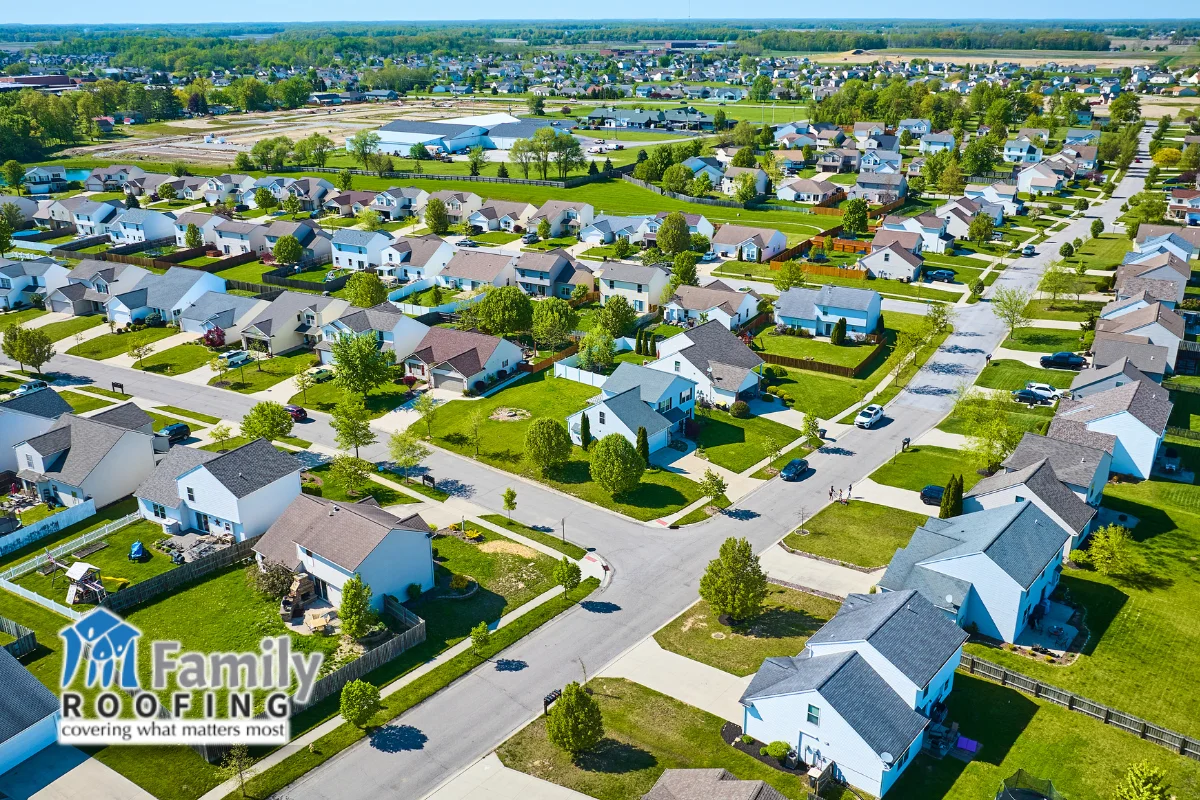
Roof geometry is the single most visible difference between commercial and residential roofing in Anderson. Residential roofs are typically steep-sloped for water runoff, with pitches ranging from 4:12 to 9:12 or steeper. Builders frame these with rafters or engineered trusses, then sheath them with plywood or OSB to create attic space that supports ventilation. Residential roofs are typically constructed with plywood and shingles layered over that deck.
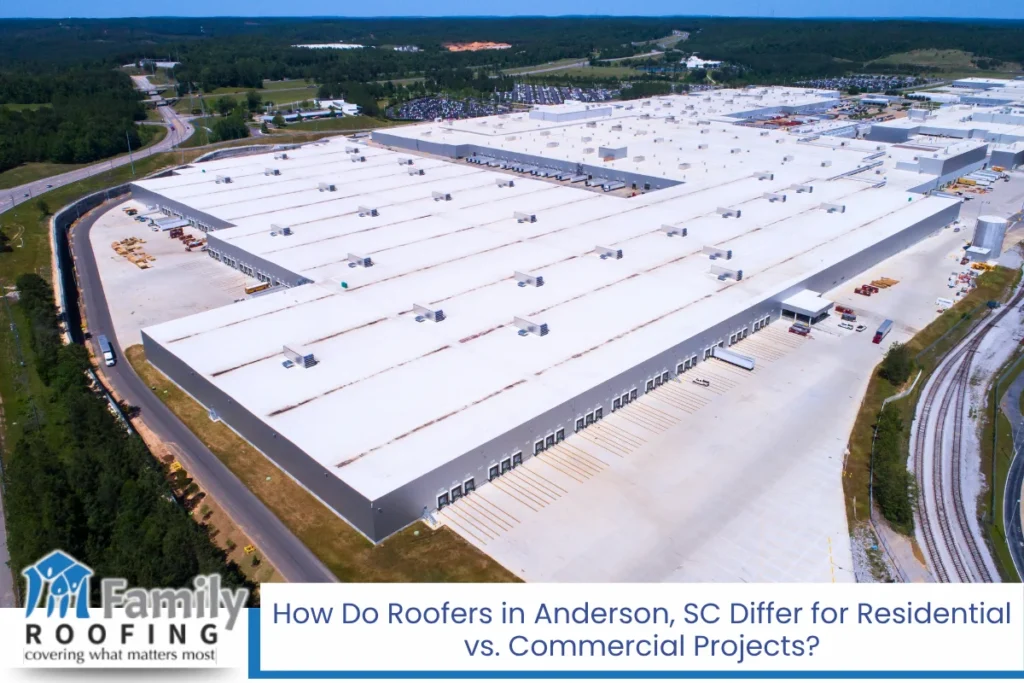
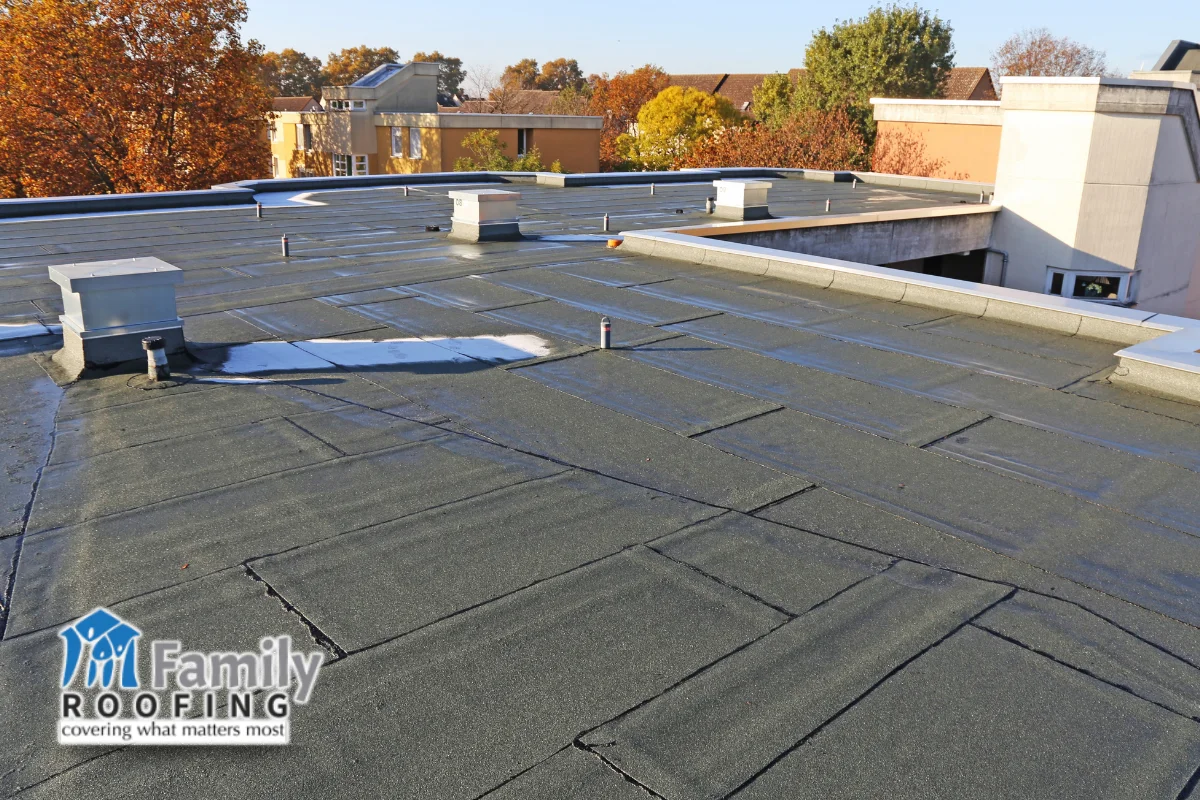
Commercial roofs are usually flat or low-slope to support equipment such as HVAC units, exhaust fans, and satellite arrays. These structures use steel or concrete decks, often span large areas without interior load-bearing walls, and include parapet walls at the perimeter. Flat roofs need engineered drainage solutions to prevent pooling; internal drains, scuppers, and tapered insulation direct water off the surface before it accumulates.
Anderson’s position in Climate Zone 3A means both residential and commercial roofs face high wind loads during storm season. Wind resistance is critical for both residential and commercial roofing, which is why South Carolina building codes require continuous load path connections from the roof assembly through the walls to the foundation. The Anderson County Building Department enforces specific guidelines for roofing projects tied to these state-adopted standards.
Material Choices: Residential Shingles vs. Commercial Roofing Membranes
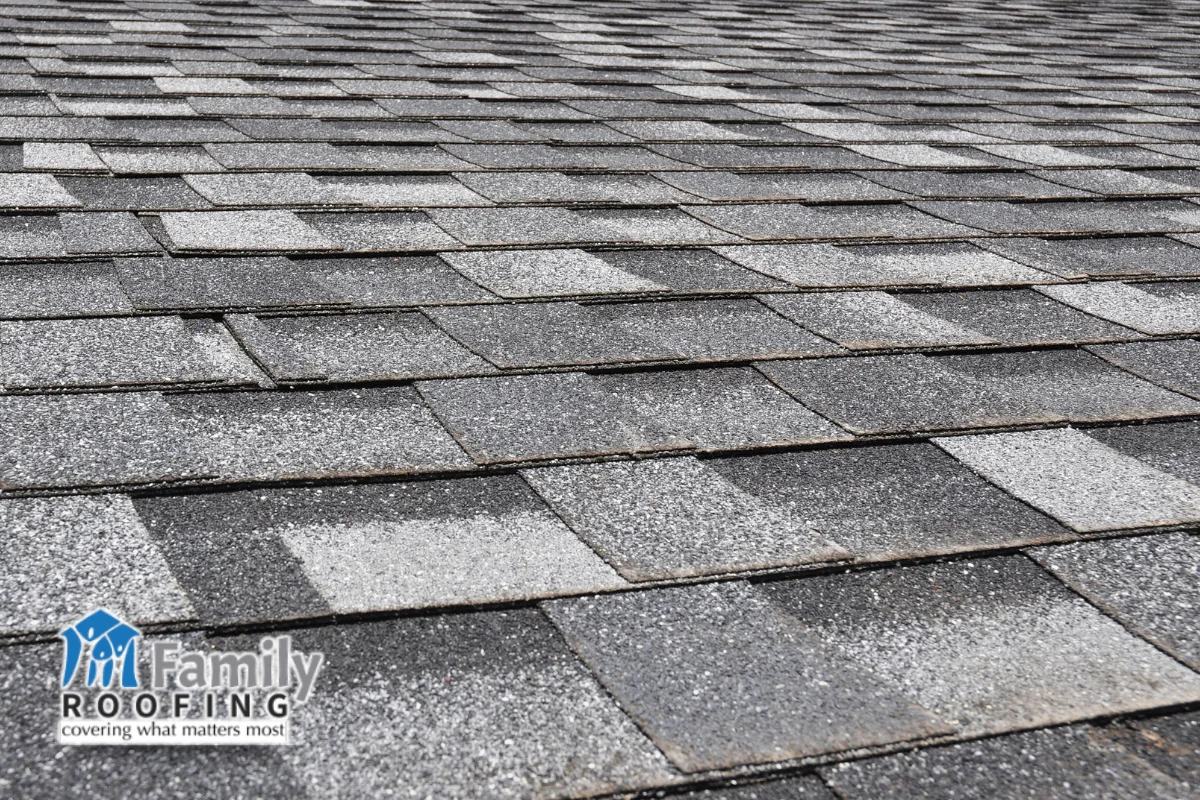
Residential roofing materials are selected for durability, weather resistance, and curb appeal. Residential roofs focus heavily on aesthetics and curb appeal because the roof is one of the most visible parts of a home. The most common residential options in upstate South Carolina include:
- Architectural asphalt shingles (the dominant choice; $5 to $8 per square foot installed)
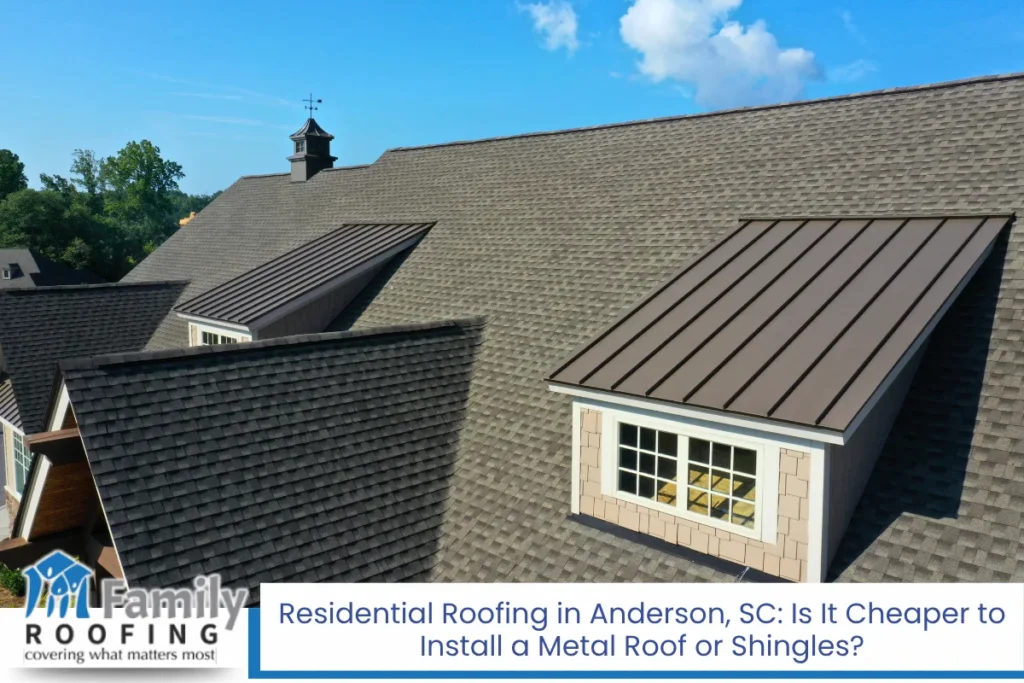
- Standing seam metal roofing or metal panels (higher cost, 40 to 60+ year lifespan)
- Tile or slate for premium homes (less common locally)
Residential roofs often use asphalt shingles for affordability, and residential roofing commonly uses architectural asphalt shingles because they offer better wind ratings and longer warranties than basic three-tab products. Residential roofs typically use asphalt shingles or metal panels depending on the homeowner’s budget and long term performance goals. Metal roofing can outlast standard shingles by decades, making metal options attractive despite higher upfront cost.
Commercial roofing materials serve a different set of priorities: waterproofing large flat surfaces, resisting foot traffic, and reflecting UV rays. Commercial roofs often utilize TPO, PVC, or EPDM membranes. Modified bitumen and built-up systems also remain common on low slope commercial roofs across Anderson. Commercial roofs require more water protection due to their flat design, so membrane seam quality and flashing details around penetrations are central to system performance.
Experienced roofers select compatible underlayments, flashings, and sealants tailored to each system. A residential roofer matches drip edges and valley flashings to shingle profiles. A commercial roofing contractor matches curb flashings, drain assemblies, and perimeter metal to the membrane type. The specialized materials used in each system are not interchangeable.
Installation Methods and Project Complexity for Each Roof Type
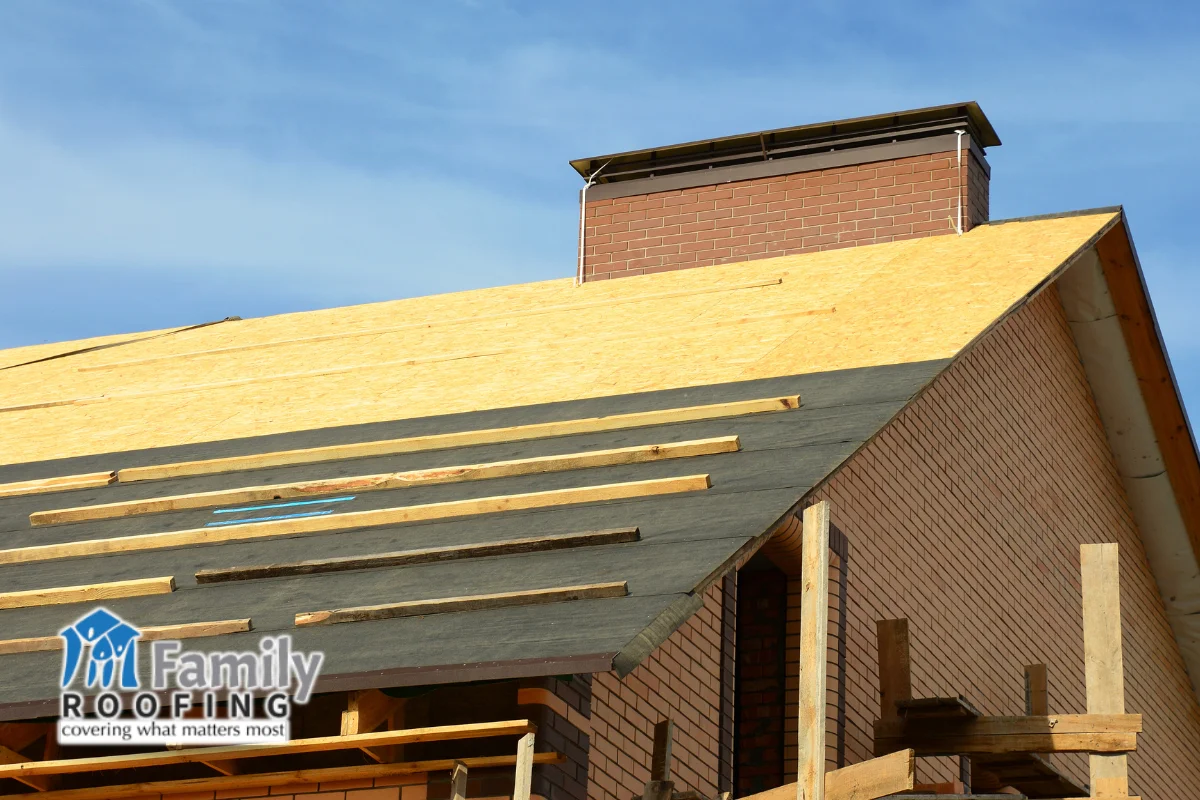
Installing shingles on a pitched home and heat-welding seams on a 20,000 square foot commercial membrane are different skill sets entirely.
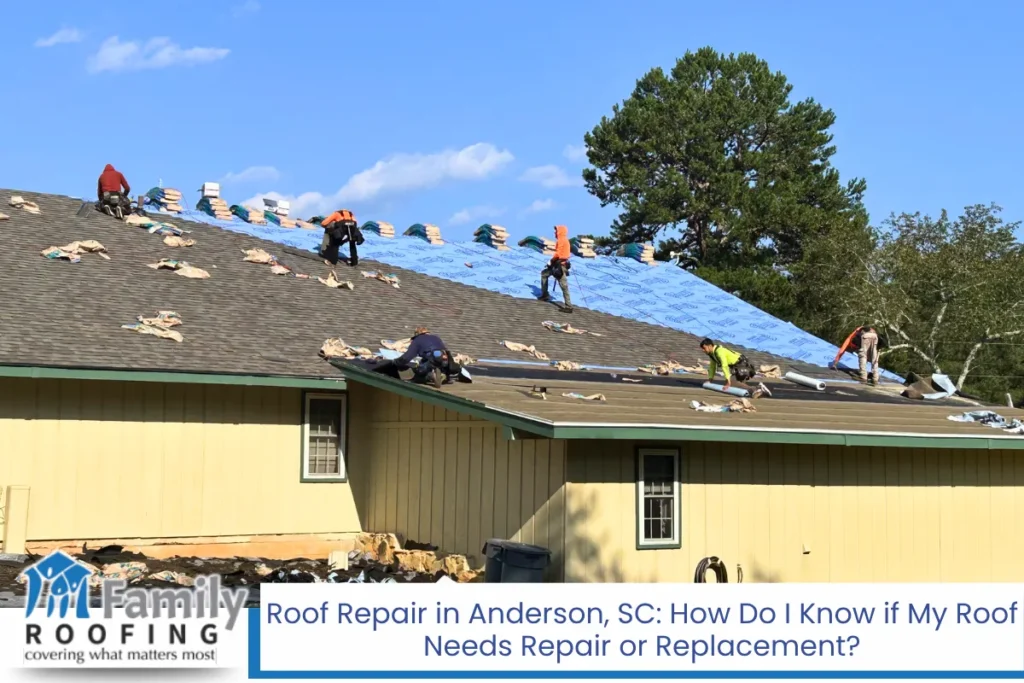
Residential roofing installation is generally faster and simpler. A typical home reroof follows this sequence:
- Tear-off of existing shingles and disposal
- Deck inspection and repair of damaged plywood
- Synthetic underlayment, drip edge, and flashing installation
- Shingle or metal panel installation from eave to ridge
- Ridge vent and soffit vent installation for attic airflow
Residential projects are usually completed in one to two days for an average-sized home. Even complex residential roofs with dormers, valleys, and skylights usually wrap up within a week.
Commercial roofs require more complex installation methods. Commercial roofing systems often involve multi-layer assembly during installation: substrate prep, insulation boards, cover boards, vapor barriers, and then the membrane itself (fully adhered, mechanically fastened, or ballasted). Commercial roofs typically require more advanced installation techniques such as hot-air welding of TPO seams or torch application on modified bitumen sheets.
Commercial roofing systems are larger and more complex than residential systems, and the project complexity scales with roof size. Staging materials on a flat roof, coordinating crane deliveries, and maintaining safety zones around occupied retail buildings or offices add layers of planning. Commercial roofing jobs can take weeks or months to complete, especially when work must be phased so tenants can continue operations.
Maintenance, Inspection Routines, and Roof Lifespan Expectations
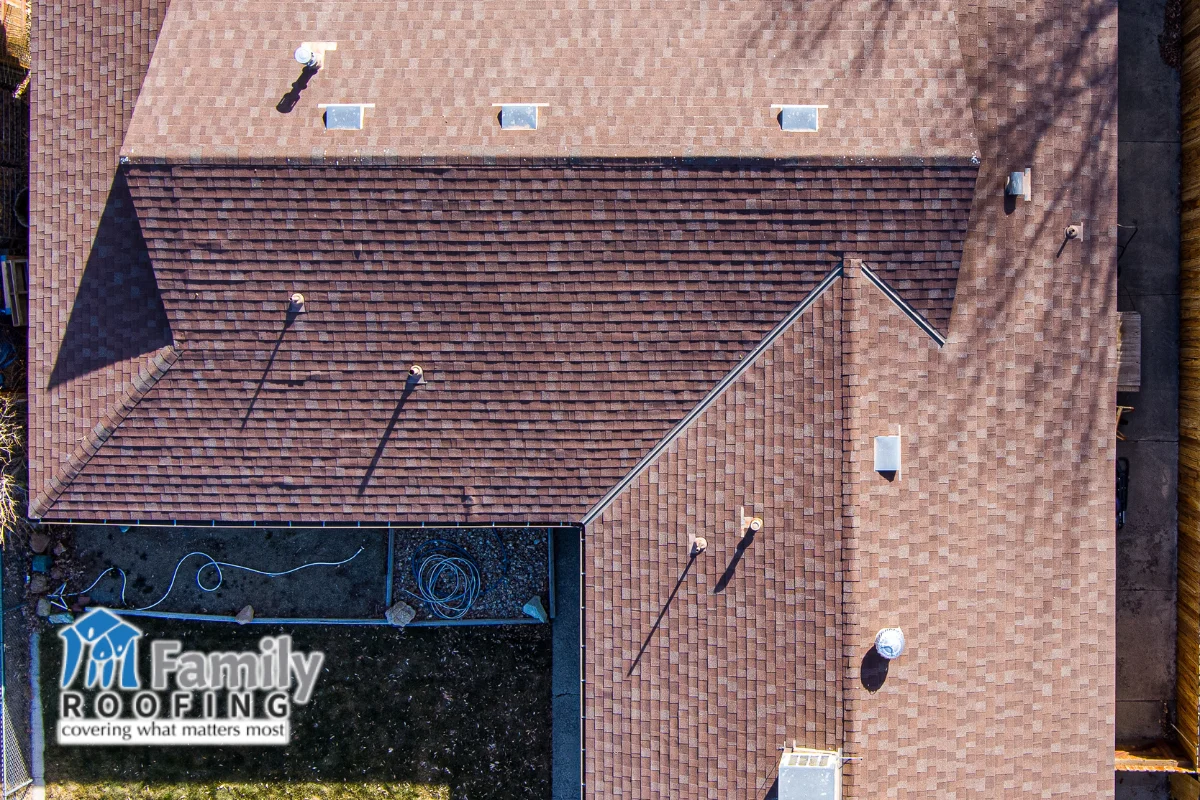
Planned ongoing maintenance determines whether a roof reaches or exceeds its expected service life. Both residential and commercial roofs in Anderson face the same regional stressors: UV exposure, humidity, seasonal storms, and temperature swings between day and night.
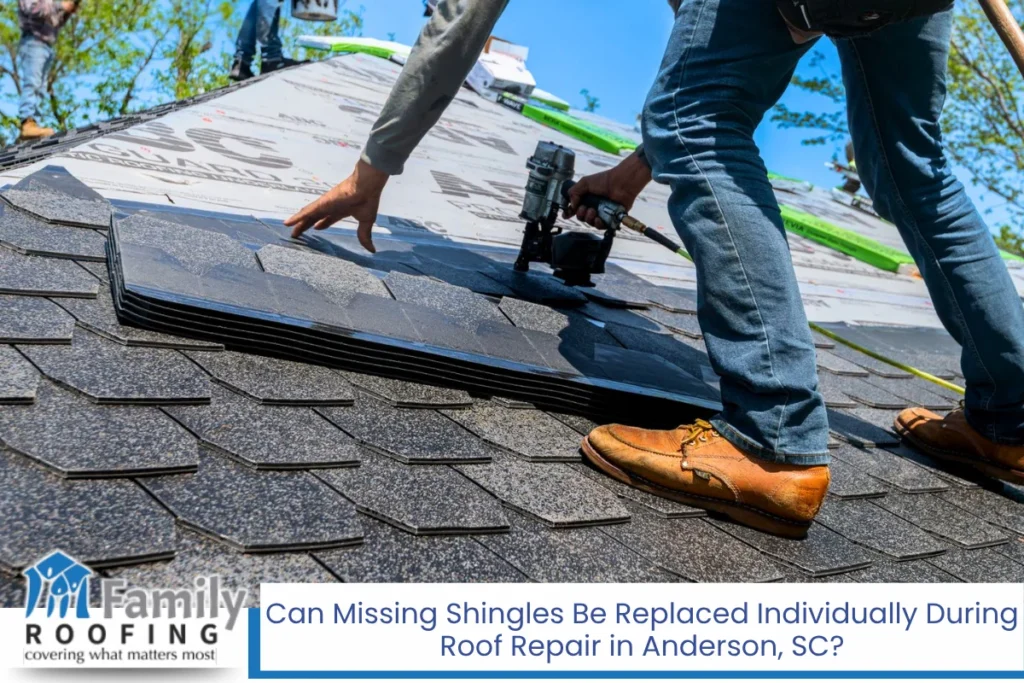
Residential roofs benefit from periodic inspections to prevent issues. Homeowners should schedule visual checks twice a year (spring and fall) plus an assessment after any severe weather events. Routine maintenance includes clearing gutters, replacing cracked or missing shingles, and resealing flashings around chimneys and dormers.
Commercial roofs require more frequent maintenance than residential roofs. Flat surfaces collect debris, ponding water, and foot traffic damage from HVAC service visits. Quarterly professional inspections are standard practice. Heavy rain can reveal weaknesses in roof drainage systems, so post-storm checks are critical for catching blocked drains or scuppers before water infiltrates the building. Commercial roofs require more frequent maintenance due to their design; flat roofs need engineered drainage solutions to prevent pooling, and any obstruction in that drainage path accelerates deterioration.
Regular inspections help extend the lifespan of commercial roofs. Manufacturers of commercial roofing often require documented routine maintenance logs for warranties. Without those records, a warranty claim for a failed seam or membrane blister may be denied.
Lifespan comparisons for properly maintained systems in this region:
| Roof System | Expected Lifespan |
|---|---|
| Three-tab asphalt shingles | 15 to 25 years |
| Architectural asphalt shingles | 20 to 30 years |
| Metal roofing (residential) | 40 to 60+ years |
| TPO membrane (commercial) | 22 to 30 years |
| EPDM membrane (commercial) | 25 to 35+ years |
| PVC membrane (commercial) | 20 to 30 years |
| Modified bitumen (commercial) | 20 to 30 years |
Residential roofs typically last 20 to 30 years with proper care. Asphalt shingles last 20 to 30 years when properly ventilated. Residential roofs typically have shorter lifespans than commercial roofs because asphalt degrades faster under UV than most single-ply membranes, though metal residential systems close that gap.
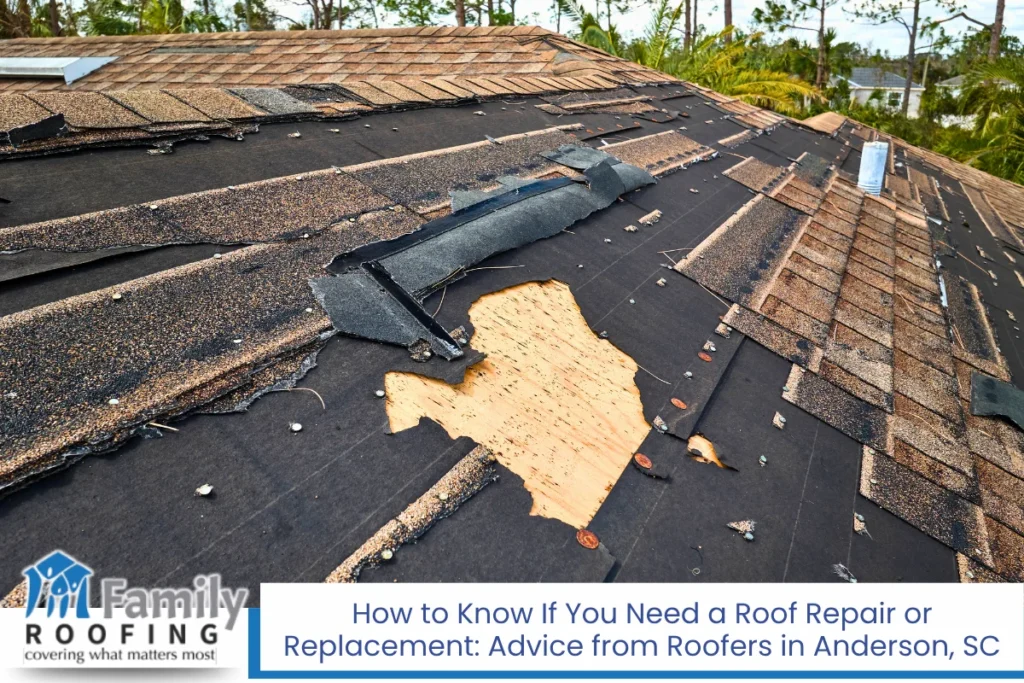
Read How to Know If You Need a Roof Repair or Replacement: Advice from Roofers in Anderson, SC
Cost Drivers: Why Commercial Roofing Often Costs More
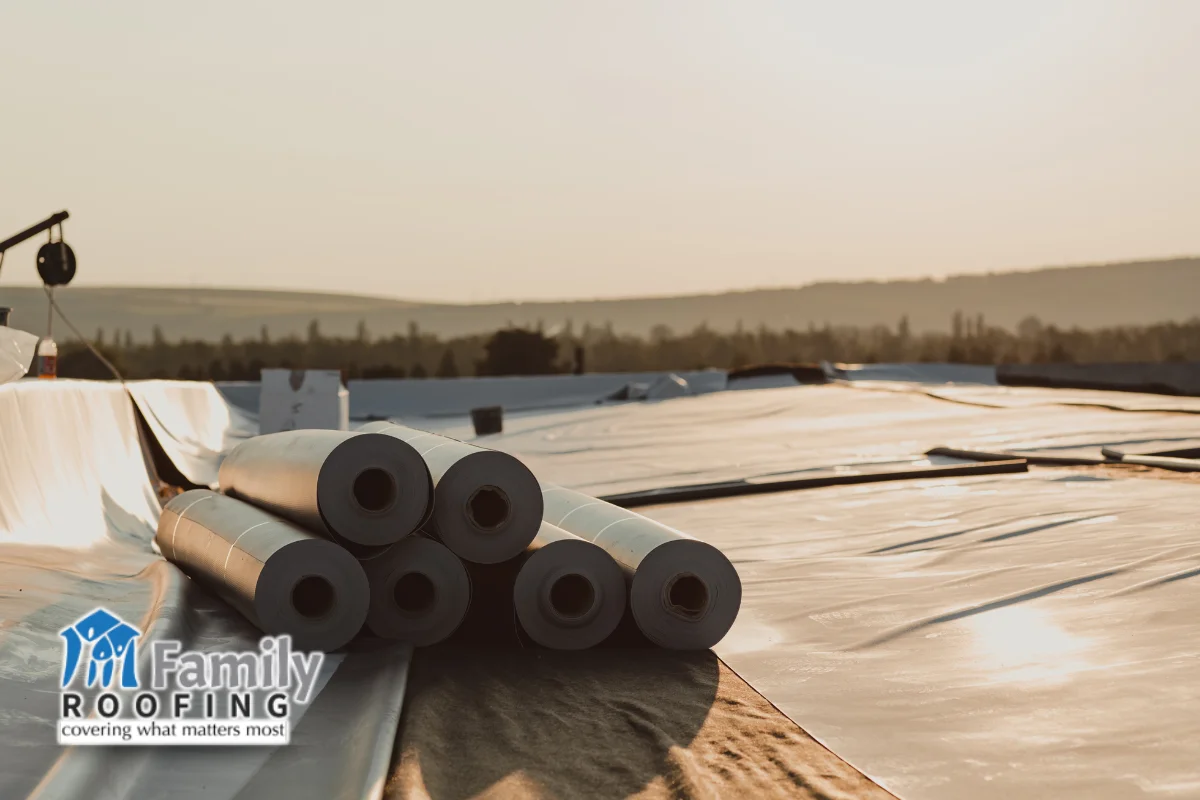
Square-foot pricing alone does not tell the full story. Roofing costs vary based on roof size and complexity, and understanding the scope differences between a 2,500 square foot home and a 30,000 square foot warehouse explains the pricing gap.
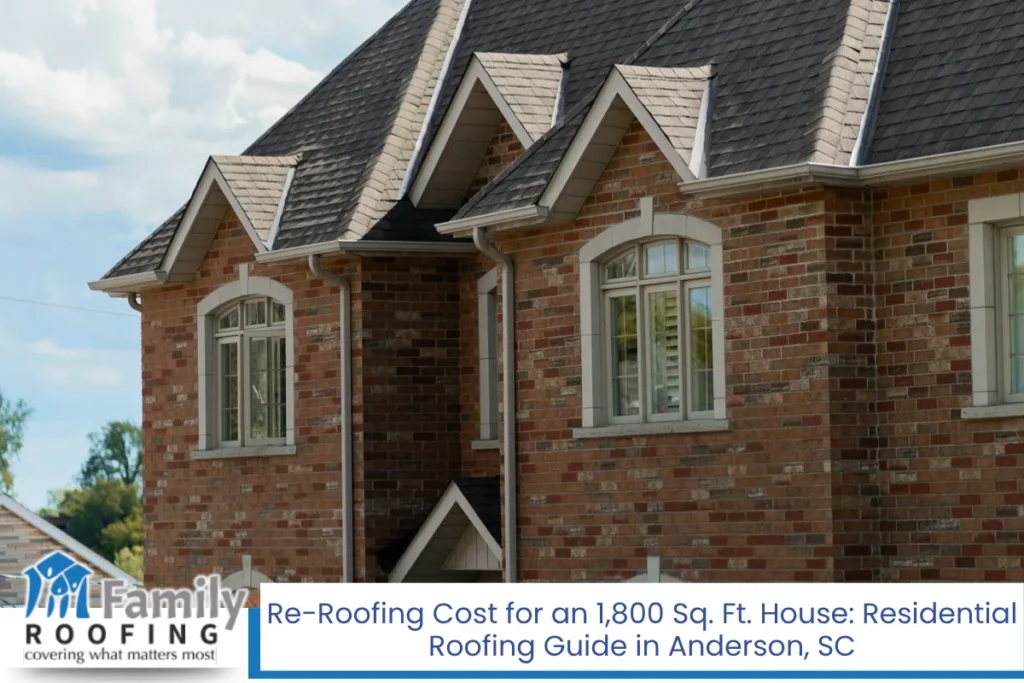
Residential roofing is generally more affordable upfront. In Anderson, a complete roof replacement using architectural shingles on an average home runs about $16,400, or roughly $6.49 per square foot installed. Key cost factors for homes include:
- Steep-slope labor and safety equipment
- Number of existing layers requiring tear-off
- Deck damage discovered during removal
- Architectural details (dormers, valleys, skylights)
Commercial roofing projects typically involve higher upfront costs. In 2026, Upstate South Carolina commercial membrane work typically averages $8.50 to $12.00+ per square foot depending on insulation R-value and system requirements, and premium specifications push that higher. Cost drivers on commercial projects include:
- Multi-layer insulation, cover boards, and vapor barriers
- Complex flashing at curbs, drains, and parapet walls
- Safety requirements and OSHA-compliant fall protection
- Phased scheduling to keep tenants operational
Long-term value shifts the conversation. Reflective membranes on commercial buildings reduce cooling costs, and longer warranty periods on commercial roofing systems lower lifecycle expense per year. Anderson homeowners and commercial property owners alike should request itemized estimates so they can compare proposals on material quality, warranty terms, and workmanship rather than just the bottom-line number.
Energy Efficiency, Ventilation, and Moisture Control in Anderson’s Climate
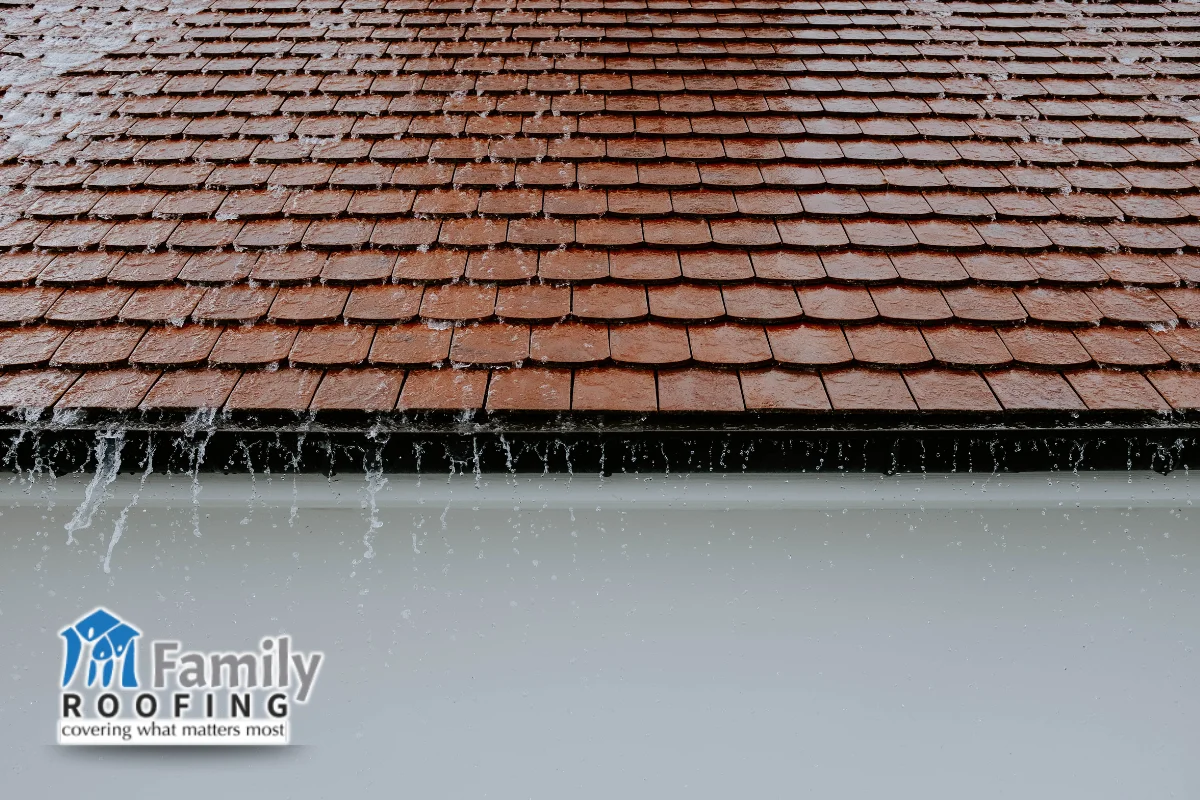
Anderson’s hot summers and persistent humidity make energy efficiency and moisture control priorities for every roofing project. Local weather patterns in South Carolina necessitate specific roofing practices tied to heat gain, condensation risk, and storm preparedness.
On residential roofs, proper attic ventilation through soffit and ridge vents prevents heat buildup that drives up cooling costs. Radiant barrier sheathing under the roof deck reflects heat before it enters the attic. Inadequate ventilation leads to moisture accumulation, mold growth, and premature wood rot.
On commercial buildings, energy performance depends on insulation R-value, membrane reflectivity, and drainage design. Reflective roofing membranes can reduce cooling demand in commercial buildings by 10 to 20 percent compared with dark, absorptive surfaces. White TPO and PVC membranes are common on retail centers, offices, and other commercial buildings in Anderson for this reason. Tapered insulation serves double duty: it moves water toward drains while adding thermal resistance.
Vapor control matters in conditioned commercial spaces. Without a properly placed vapor retarder, condensation forms between insulation layers and can saturate the deck. Anderson property owners should ask their roofing company about insulation options, reflective coatings, and any available tax incentives or utility rebate programs tied to energy-efficient roof systems.
Code Compliance, Permits, and Safety Standards for Anderson Roofing Projects
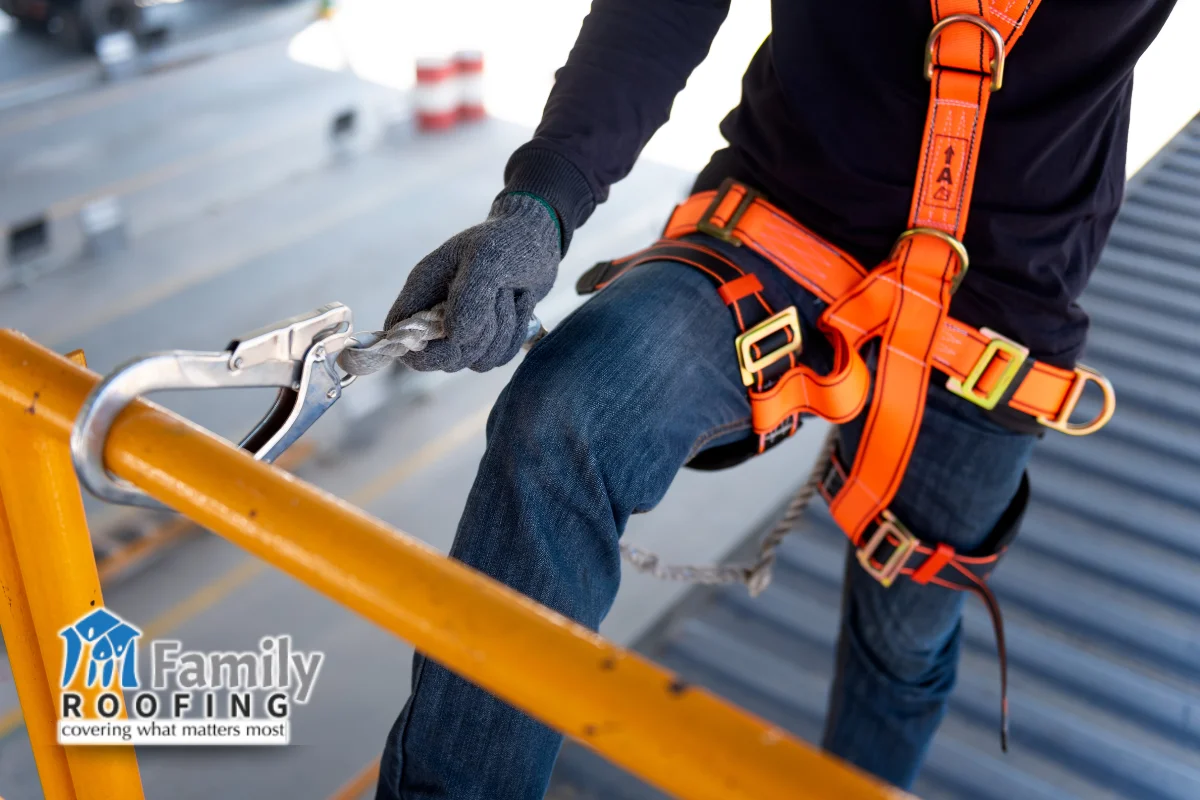
Both residential and commercial work in Anderson must comply with South Carolina building codes and local permitting rules. Roofing contractors in South Carolina must be licensed through the South Carolina Residential Builders Commission (for residential work exceeding $500) or the South Carolina Contractors’ Licensing Board (General Contracting – Specialty Roofing for commercial projects exceeding $10,000) under the SC Department of Labor, Licensing and Regulation (LLR). Roofing contractors must hold the appropriate subclassification license, and commercial work above certain cost thresholds requires a commercial general contractor license.
Residential permits address structural and wind-uplift standards under the 2021 South Carolina Residential Code (SCRC), while commercial projects fall under the 2021 South Carolina Building Code (SCBC / IBC). Commercial projects require more detailed plan review, including engineered wind uplift calculations, fire ratings, drainage design, and structural load analysis under the International Building Code.
Safety protocols on commercial sites demand strict OSHA compliance. Fall protection, perimeter guardrails, and crew safety training are mandatory on large-scale commercial work. Residential jobs carry safety requirements too, but the scale and regulatory scrutiny increase on commercial properties.
Following manufacturer installation standards is the final piece. If a roofing crew deviates from the membrane manufacturer’s welding temperatures, fastener patterns, or flashing details, the warranty is void. Some state housing programs require low slope roofing products to be installed by manufacturer-certified crews with a minimum 30-year warranty.
How Residential Roofers and Commercial Specialists Organize Their Teams
A residential roofing crew on a home reroof typically consists of a foreman, two to four laborers, and a detail specialist who handles flashing and trim. The foreman communicates directly with the homeowner, and the job moves fast. Residential roofing typically involves simpler contracts with immediate payment upon completion once the final walkthrough is done.
Commercial teams look different. A large commercial project may include a project manager, a site superintendent, a dedicated safety officer, membrane technicians, sheet-metal fabricators, and insulation specialists. Commercial contracts often include complex bidding and structured progress payments tied to project milestones. The roofing crew coordinates with building management, tenants, and sometimes other trades working on the same property.
Scheduling and site access also diverge. A residential roofer parks a trailer in the driveway and uses the yard for staging. A commercial specialist may need lift equipment, rooftop cranes, and designated delivery windows that avoid disrupting retail buildings, warehouses, or office tenants. Anderson property owners should ask prospective contractors who will be on-site daily, how progress updates will be communicated, and who to call if an issue arises.
Choosing the Right Roofer for Your Anderson Home or Commercial Building
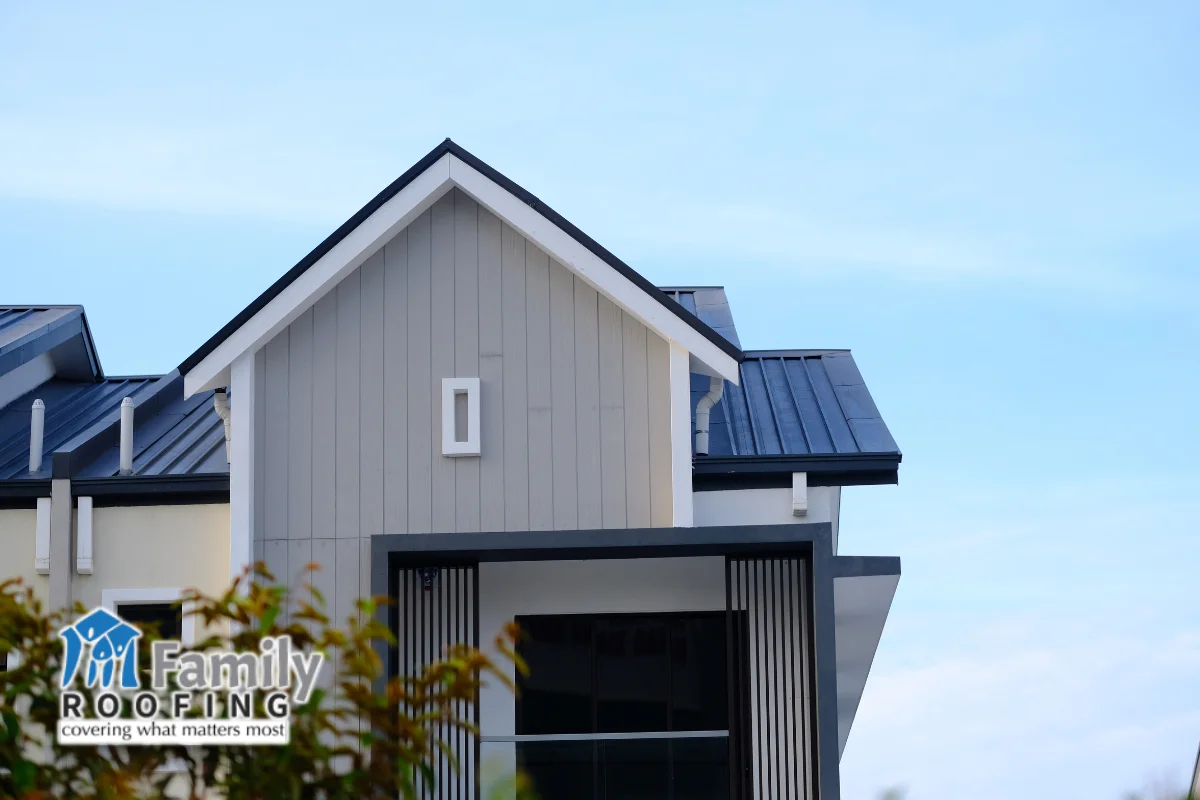
Experience with your specific roof type matters more than generic roofing claims. A contractor who has installed thousands of shingle roofs may have zero experience with 80-mil TPO systems, and vice versa.
For homeowners, selection tips include:
- Verify the contractor holds a valid SC roofing license
- Ask for photos and references from recent residential work in Anderson
- Confirm the company carries workers compensation coverage and liability insurance
- Compare workmanship warranty length, not just material warranty
For commercial clients and property managers:
- Confirm experience with the specific membrane system (TPO, EPDM, PVC, or modified bitumen)
- Ask about past projects on occupied commercial buildings and retail centers
- Request proof of manufacturer certification for the system being proposed
- Review the contractor’s safety record and OSHA training documentation
A contractor offering both commercial and residential roofing can simplify long-term care for mixed-use commercial properties or landlords managing residential and commercial clients. Look for dependable roofing solutions backed by a track record, not promises.
Protecting Your Investment: Planning for the Full Roof Life Cycle
A quality roof is a long-term investment measured in decades, not a line item to minimize at purchase. The life cycle starts at the design stage: slope, drainage, material selection, and ventilation decisions made before the first nail is driven determine how the roof performs at year 15 or year 30.
Budget for periodic professional inspections, minor sealant and flashing repairs, gutter cleaning, and eventual full replacement. Emergency repairs after storm damage cost far more than planned maintenance programs that catch problems early. Documented inspection reports, before-and-after photos, and repair invoices support insurance claims, warranty enforcement, and property resale value.
Know the warning signs that push a roof past repair into new roof territory: widespread leaks, saturated insulation, structural deck damage, or membrane failure that patching cannot address. A roofing contractor who explains findings with photos and written reports, rather than pressuring a sale, is worth keeping on call.
Pairing the right roofer with the right roofing systems is what separates a roof that protects for decades from one that fails within ten years. That applies equally to single family homes and sprawling commercial properties across the surrounding upstate area.
Roofers in Anderson, SC – Call Family Roofing
We are Family Roofing, and we handle residential and commercial roofing projects across Anderson, SC and the surrounding upstate area. Our experienced team understands the unique challenges that Anderson’s storm patterns, humidity, and heat place on every roof we touch. Whether you own a home that needs a shingle replacement or manage a commercial building that requires membrane repair, we bring quality craftsmanship, honest guidance, and clear communication to every job.
We are fully licensed, insured, and committed to customer satisfaction on every project. Call us at (864) 261-0841 or fill out our contact form to schedule free inspections, discuss repairs, or plan a complete roof replacement. Family Roofing is proudly serving Anderson property owners who expect quality workmanship and long-term support from their roofing company.
Frequently Asked Questions
How often should roofs in Anderson be inspected for weather-related damage?
Residential roofs should be inspected at least once per year, with an additional check after any severe storm that brings hail, high winds, or heavy rainfall. Commercial roofing systems on flat or low slope structures need quarterly inspections because debris, ponding water, and rooftop equipment create more opportunities for damage between visits. After major weather events like the thunderstorms common in upstate South Carolina from April through September, schedule a professional assessment within a week. Keep written records and photos from every inspection. These documents serve as maintenance tracking for warranty compliance and provide evidence for insurance claims if roof damage is discovered later.
How do I know if my roof needs a full replacement instead of just repairs?
Several indicators point toward full replacement rather than patching. On residential roofs, watch for widespread shingle loss, curling, or granule erosion across large sections; recurring leaks in multiple locations; and visible sagging or soft spots in the decking. Inside, ceiling stains, peeling paint, and musty odors suggest ongoing moisture intrusion. On commercial roofs, core samples can reveal saturated insulation that cannot dry out, and infrared scans detect trapped moisture invisible from the surface. Ask your roofing contractor for a written report comparing the cost of continued repairs against a new roof. When repair costs approach 30 to 40 percent of replacement cost, reroofing usually makes more financial sense.
What should I ask a roofer before starting a commercial roofing project?
Start with licensing and insurance: confirm the contractor holds the correct SC LLR roofing subclassification and carries workers compensation coverage. Ask how many commercial projects of similar scope and membrane type they have completed in the Anderson area. Request references from commercial clients whose buildings stayed occupied during the work. Ask specifically how the crew will manage noise, debris, parking disruptions, and access to the building during installation. Review the proposed scope of work for insulation R-values, flashing details, and drain configurations. Confirm the manufacturer warranty terms and whether the contractor is a certified installer for the membrane system being proposed.
Are roofing warranties different for residential roofs and commercial systems?
Yes. Residential warranties typically cover the shingle or panel product for a defined period (often 25 to 50 years for materials) plus a shorter workmanship warranty from the installer (usually 5 to 10 years). Commercial roofing systems often use manufacturer system warranties that bundle materials and labor under one coverage document, sometimes with no-dollar-limit terms for 20 or 30 years. These system warranties usually require that an approved, certified installer perform the work and that the building owner maintain documented maintenance logs. If maintenance lapses, the manufacturer can deny a claim. Keep all contract documents, warranty registrations, inspection records, and repair invoices organized in one file so coverage is never lost.
Can my business stay open during a commercial roof replacement?
Most Anderson businesses can remain open during a commercial roof replacement if the contractor plans the work in phases and coordinates with building management. Contractors typically section the roof into zones, completing one area before moving to the next, so only part of the building is affected at any time. Deliveries and crane operations are scheduled during off-peak hours when possible. Temporary barriers, signage, and debris chutes protect customers, staff, and vehicles below. Discuss scheduling expectations, noise-sensitive hours, access points, and parking needs with your roofing contractor before the project starts. Clear communication between the roofing crew and building tenants reduces disruptions and keeps the job site safe for everyone.
Disclaimer
This article provides general information about roofing in Anderson, SC. It is not legal, engineering, or code-compliance advice. Consult local building officials, licensed professionals, and current manufacturer guidelines before starting any roofing project.
Read Residential Roofing in Anderson, SC: Is It Cheaper to Install a Metal Roof or Shingles?